
Trivia
- “Michelle” is a love ballad, mainly written by , with the middle eight co-written with . The song is unique among other Beatles tracks in that its lyrics are partially in French.
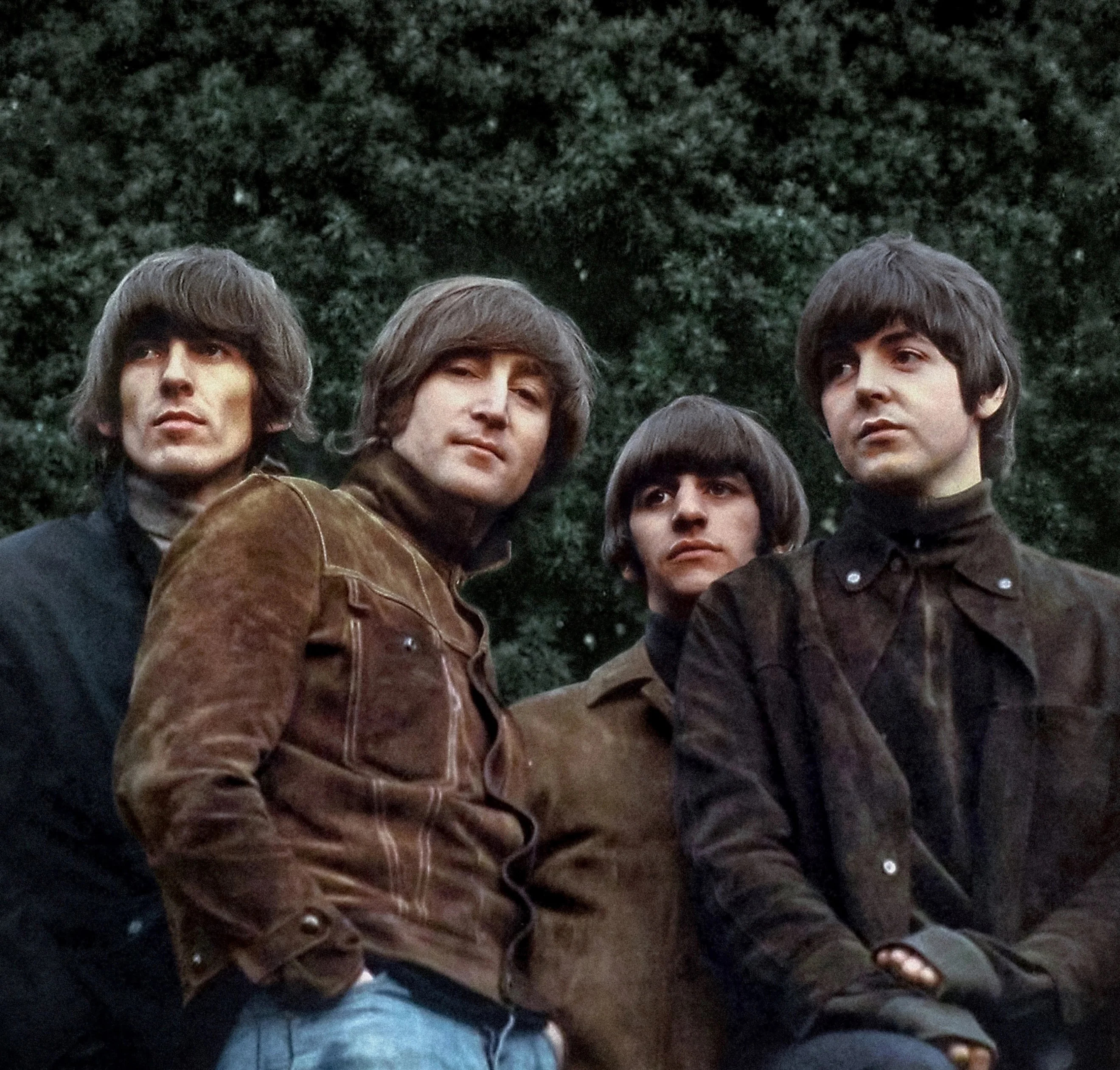
- The Beatles rehearsed, recorded and completed the song during a single nine-hour studio session. Photographs taken during the session for The Beatles Book Monthly show the instruments most likely heard on “Michelle”. Paul played an Epiphone Texan FT-79 acoustic guitar and a Rickenbacker 4001S electric bass, while used a Gibson J-160E for the rhythm backing. John’s instrument was a handmade Spanish classical guitar he had acquired in Madrid in July 1965.
- Beatles producer stated that he composed the melody for the guitar solo, heard midway through the song and again during the fadeout. He wrote out the notes for George Harrison to play, telling him: “I’ll play this. George, you can do these notes on the other guitar; we’ll play in unison”.
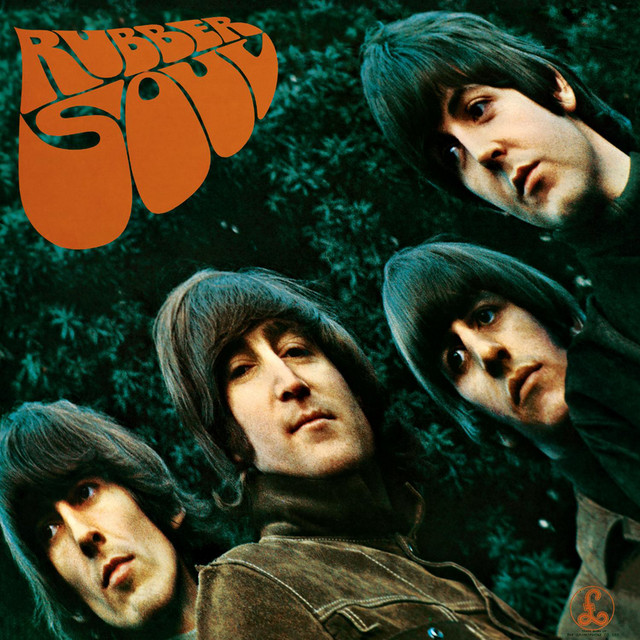
- The US mono version of “Michelle” differs from the UK mix because George Martin and Norman Smith created a revised mix days after sending the original to Capitol Records in the US. The revision corrected audible distortion in Paul’s lead vocal. This revised mix appeared on the UK and European mono editions of Rubber Soul, while the original mix was used on the US mono release.
- The song won the Grammy Award for Song of the Year at the 9th Annual Grammy Awards in 1967.
In early 1966, the song was issued as a single in numerous countries outside the UK and US. It topped the charts in Italy for eight weeks, the Netherlands for seven weeks and Sweden for five weeks, as well as reaching number one in Hong Kong, Ireland, New Zealand and Singapore.
Paul explained why “Michelle” was not released as a single in the UK:
“There are songs which we like but we wouldn’t like to have out as singles. [...] We always used to think for a single we’d have to have something pretty fast. I don’t know why. [...] So when we did ‘Michelle’, we all thought it was okay, but we just didn’t want it out as representative of us at the time”.
- In some countries, the song was released as the title track of an , which spent five weeks at No. 1 in France.
- Within weeks of Rubber Soul’s release, two cover versions of “Michelle” achieved chart success: the Overlanders’ version reached number one in the UK, while David & Jonathan’s version, produced by George Martin, became a Top 20 hit in both the UK and the US.
- Chet Atkins, whose fingerpicking style had inspired Paul’s composition of ‘Michelle’, recorded an instrumental version of the song for his 1966 album Chet Atkins Picks on the Beatles, dedicated to the Lennon–McCartney songbook. Paul explained how Atkins had influenced the composition:
“There is a song he did called ‘Trambone’ with a repetitive top line, and he played a bass line whilst playing a melody. This was an innovation for us. Based on ‘Trambone’, I wanted to write something with a melody and a bass line on it, so I did. ‘Michelle’ was written in Chet Atkins’ finger-pickin’ style”.
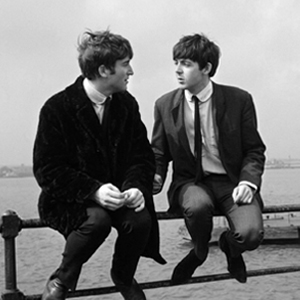
Words from Paul and John
“John, being older and at art school, would take me to art school parties. I remember going to one and sitting in the corner with my black polo-neck sweater on, trying to look interesting to this older crowd. I had the acoustic guitar with me, and I was playing a French-sounding song and making guttural noises. I was half hoping that someone would think I was French, possibly even a French intellectual.
So that’s where it all started, with my memory of having this faux French song that must have been influenced by Édith Piaf’s ‘Milord’, a big hit in 1959. [...]
Another element was the fact that George Harrison and I liked learning new chords and finding ways to put them into songs. We knew a guy called Jim Gretty, who worked in Hessy’s guitar shop in Liverpool. [...] Jim Gretty would often stand behind the counter in Hessy’s, playing a bit of guitar, as guys in music shops so often do. We really admired his skills. He was far more advanced than us. One chord we heard him play was particularly lush, and he took the trouble to demonstrate it to us. It was what we knew as an F chord, a simple F shape, down at the first position, down at the nut. But Jim used two more of his fingers to cover the first two strings up on the fourth fret, which would be A-flat and E-flat, so there was an extra component to the F chord. The good thing was that if he showed something to both of us, we were bound to remember it because if George forgot it I’d remember it, and vice versa. We called Gretty’s lush F chord ‘F demented’.
In the Beatles period we were looking for new songs, and John once said to me, ‘Remember that daft French thing you used to do at parties?’ I happened to meet up with Ivan Vaughan, who was probably my best friend in school. By then he’d been to University College London to study the classics. He and his wife Jan lived in Islington, and I used to visit them. Jan taught French, so I asked if she could think of a rhyme for ‘Michelle’, two syllables. She said ‘Ma belle’. So, how could I say ‘these words go together’ in French? So, Jan also gave me ‘sont les mots qui vont très bien ensemble’.
In addition to the ‘F demented’, which would have had an official name like an F augmented ninth or something, I put in a second naughty chord. Again, I don’t know its name — maybe D diminished? I got it off the Coasters record ‘Along Came Jones’. I used these two chords and this melody, and grunted along like a cod Frenchman, and there was ‘Michelle’.
“[Paul] and I were staying somewhere and he walked in and hummed the first few bars. with the words, and he says, ‘Where do I go from here?’ I had been listening to Nina Simone — I think it was ‘I Put A Spell On You’. There was a line in it that went: ‘I love you, I love you’. That’s what made me think of the middle eight for ‘Michelle’: ‘I love you, I love you, I love you’.
So my contribution to Paul’s songs was always to add a little bluesy edge to them. Otherwise, y’know, ‘Michelle’ is a straight ballad, right? He provided a lightness, and optimism, while I would always go for the sadness, the discords, the bluesy notes.
Mixes and Versions